
venerdì 10 luglio 2015
THE GOLD LIGHT
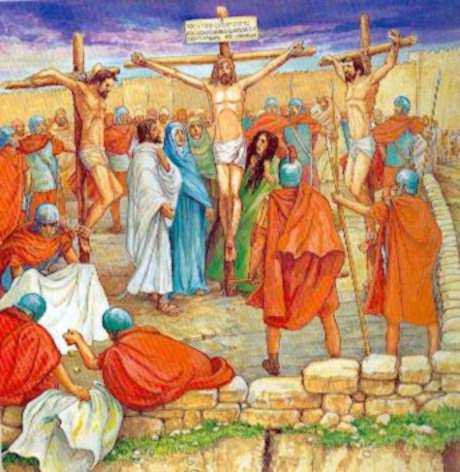
THERE IS A GOLD LIGHT IN CERTAIN OLD PAINTINGS
BY DONALD JUSTICE
There is a gold light in certain old paintings
That represents a diffusion of sunlight.
It is like happiness, when we are happy.
It comes from everywhere and from nowhere at once, this light,
And the poor soldiers sprawled at the foot of the cross
Share in its charity equally with the cross.
C'è una luce dorata in certi vecchi dipinti
Che rappresenta il sole che si diffonde.
E' come la felicità, quando siamo felici.
Viene da ogni luogo e da nessun luogo, questa luce,
E i poveri soldati sparsi ai piedi della croce
Con lei equamente condividono la sua carità.
Orpheus hesitated beside the black river,
With so much to look forward to he looked back.
We think he sang then, but the song is lost.
At least he had seen once more the beloved back.
I say the song went this way: O prolong
Now the sorrow if that is all there is to prolong.
Orfeo esitò lungo il nero fiume.
Con così tanto da guardare in avanti egli guardò indietro.
Noi pensiamo che egli cantò allora, ma la canzone è perduta.
Almeno vide la sua amata ancora una volta.
Io dico che la canzone faceva così: O prolunga
Ora il dolore se questo è ciò che è da prolungare.
The world is very dusty, uncle. Let us work.
One day the sickness shall pass from the earth for good.
The orchard will bloom; someone will play the guitar.
Our work will be seen as strong and clean and good.
And all that we suffered through having existed
Shall be forgotten as though it had never existed.
Il mondo è molto polveroso, amico. Diamoci da fare.
Un giorno la malattia del mondo cambierà in meglio.
Il frutteto fiorirà; qualcuno suonerà la chitarra.
Il nostro lavoro sarà visto come forte e pulito e giusto.
E tutto ciò che abbiamo sofferto essendo esistiti
Sarà dimenticato come se non fosse mai accaduto.
Traduzione di Ipazia


lunedì 6 luglio 2015
Néstor Perlongher y sus cadáveres: del neobarroso a la necropoética
 |
| Ezequiel Zaiderwerb |
Néstor Perlongher y sus cadáveres: del neobarroso a la necropoética
SOBRE EL AUTOR
Ezequiel Zaidenwerg
New York University
Estados Unidos
Candidato doctoral, Departamento de Español y Portugués, New York University. Magíster en escritura creativa, área poesía, New York University. Es autor de los poemarios Doxa (Vox, 2007), La lírica está muerta (Vox, 2011).
ZAIDENWERG, E.. Néstor Perlongher y sus cadáveres: del neobarroso a la necropoética. Cuadernos de Literatura, Norteamérica, 19, jul. 2015. Disponible en:
This article explores the politics
of the poetic form in the works of
Nestor Perlongher, in the context
of the last military dictatorship
in Argentina. First of all, we
analyze the appropriation and
adaptation operations that the
Argentinian poet, anthropologist,
and militant performed on
the Cuban neo-baroque of
Lezama and Sarduy when it
comes to imposing in Rio de la
Plata a poetics that Perlongher
would call “neobarrosa”.
Then, we study the fascination
of Perlongher with national
corpses, from Eva Peron to the
disappeared, and postulate that,
faced with the militant option,
the Argentinian inclines for
necropoetics. In this way, forms
and traditions that were left for
dead raise as zombies and, in this
emphasis on the corporality of
language, Perlongher not only
gives them a political body, but
returns the material quality to the
faded bodies of the disappeared.
Iscriviti a:
Post
(
Atom
)


