Visualizzazione post con etichetta Montale. Mostra tutti i post

venerdì 25 maggio 2012

EUGENIO MONTALE, I LIMONI, traduzione di Alessandro Panciroli,


Grazie ad alcuni preziosi consigli di Adele Kenny,
ho potuto rivedere e perfezionare la traduzione de I Limoni di Eugenio Montale, eliminando in particolare le forme in "ing"


  The Lemon Tress    translated by Alessandro Pancirolli

Listen, laureate poets
Only move through trees
With not many used names: Boxus, Ligustrum or Acanthus.
I prefer country-roads that open onto the green
Edges where boys are clutching
in some sinking pools
Some very poor eels .
And the lanes following the edges
Sloping through the cane clumps
Leading into the orchards, among the trees of lemon grove.


La stessa traduzione riveduta e corretta da Adele Kenny


The Lemon Trees

Listen, laureate poets
Only move through trees
With not many used names:  Boxus, Ligustrum or Acanthus.
I prefer country-roads that open onto the green
Edges where boys clutch
in some sinking pools
Some very poor eels .
And the  lanes follow the edges that
Slope through the cane  clumps and
Lead into the orchards, among the trees of the lemon grove


Link utili :http://ottantanovenuvole ( Prolegomena ad una traduzione)
              http://ottantanovenuvole. Ancora sui Limoni di Montale
              http://ottantanovenuvole . Gasmann legge " Lo sai. Debbo riperderti


NANDO GAZZOLO legge, con la sua inconfondibile voce, I LIMONI

mercoledì 18 aprile 2012

Among the Tufted Canes: Twentieth-Century Italian Poetry | The Nation


The FSG Book of Twentieth-Century Italian Poetry Anthology


Poetry is what is lost in translation - R. Frost


"A surprising and illuminating collection, The FSG Book of 20th-Century Italian Poetry invites the reader to examine the works of these and other poets—seventy-five in all—in context and conversation with one another. Edited by the poet and translato Geoffrey Brock, these poems have been beautifully rendered into English by some of our finest English-language poets"  -  us. macmillan.com 


" the opening lines of Montale’s manifesto-like poem “The Lemons” are translated into English, in this case by Galassi, who is himself a fine poet..."  ( source: The Nation ,April 10, 2012)

Listen to me, the poets laureate
walk only among plants
with rare names: boxwood, privet, an
ditches where boys
scoop up a few starved
eels out of half-dry puddles:
paths that run along the banks,
come down among the tufted canes,
and end in orchards, among the lemon trees


Here, my translation:

          Listen, laureate poets
          Only move through trees
          With not many used names:  Boxus, Ligustrum or Acanthus.
          I prefer country-roads that open onto the green
          Edges where boys are clutching
          in some sinking pools 
          Some very poor eels . 
          And the  lanes following the edges
          Sloping through the cane  clumps
          Leading into the orchards, among the trees of lemon grove


and my post about translating "I Limoni" Prolegomena ad una traduzione di Montale

                  ***       ***      ***      ***      ***      ***      ***      ***      ***

 The FSG Book of Twentieth-Century Italian Poetry: An Anthology

Autore Geoffrey Brock
Curatore Geoffrey Brock
Edizione illustrata 
EditoreFarrar, Straus and Giroux, 2012
ISBN0374105383, 9780374105389
Lunghezza 672 pagine

giovedì 9 febbraio 2012

- William Butler Yeats, When You Are Old, trad. A. Pancirolli,

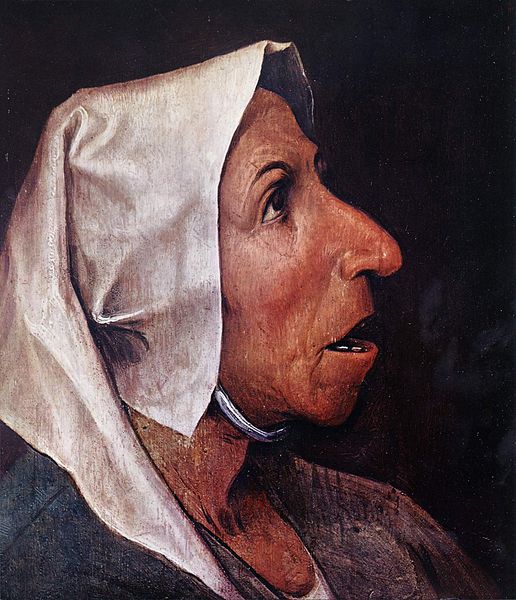
Bruegel / Una vecchia


When you are old and grey and full of sleep,
And nodding by the fire, take down this book,
And slowly read, and dream of the soft look
Your eyes had once, and of their shadows deep;

How many loved your moments of glad grace,
And loved your beauty with love false or true,
But one man loved the pilgrim soul in you,
And loved the sorrows of your changing face;

And bending down beside the glowing bars,
Murmur, a little sadly, how Love fled
And paced upon the mountains overhead
And hid his face amid a crowd of stars.

-- William Butler Yeats 


Quando  vecchia e ormai ingrigita,
te ne starai assonnata presso il focolare, sfoglia questo libro
e leggilo  piano, sognando  l' ombrosa dolcezza
quando ancor giovane ti  illuminava  gli occhi


quanti hanno amato i felici momenti della tua  grazia
ed amato , di falso o vero amore, la tua bellezza,
Ma solo un uomo ha amato l' anima tua inquieta,
ha amato le  mutevoli tristezze  del tuo  viso.


e ormai curva sulle roventi braci,
sussurrerai come l' amore tristemente fuggì
e scomparve  tra  le gelide montagne,
 si nascose infine tra gli abissi delle stelle.


Una traduzione di Montale

 Quando tu sarai vecchia, tentennante
tra fuoco e veglia prendi questo libro,
leggilo senza fretta e sogna la dolcezza
dei tuoi occhi d'un tempo e le loro ombre.

Quanti hanno amato la tua dolce grazia
di allora e la bellezza di un vero o falso amore.
Ma uno solo ha amato l'anima tua pellegrina
e la tortura del tuo trascolorante volto.

Cùrvati dunque su questa tua griglia di brace
e di' a te stessa a bassa voce Amore
ecco come tu fuggi alto sulle montagne
e nascondi il tuo pianto in uno sciame di stelle


.

martedì 17 gennaio 2012

Un' ultima traduzione de Limoni di Eugenio Montale, fatta prendendo spunto dalle traduzioni del precedente post:


Listen, laureate poets

just wander amid the plants

whose names are rare: boxus, ligustrum or acanthus.

I prefer instead small country-roads that open onto

the green ditches where, in half-dry puddles,

boys snatch some skinny eels:

the lanes that follow the edges,

slope trough the clumps of cane

And lead down to the orchards, among the lemon trees.

o anche

(Leading to the orchards, among the lemon grove.)


Eugenio Montale


sabato 14 gennaio 2012

I Limoni, The Lemon Trees di Eugenio Montale : prolegomena per una traduzione


 Ascoltami, i poeti laureati
si muovono soltanto fra le piante
dai nomi poco usati: bossi,  ligustri o acanti
Io, per me, amo le strade che riescono agli erbosi
fossi dove in pozzanghere
mezzo seccate agguantano i ragazzi
qualche sparuta anguilla:
le viuzze che seguono i ciglioni,
discendono tra i ciuffi delle canne
e mettono negli orti, tra gli alberi dei limoni. 


The Lemon Trees  
by Eugenio Montale
translated by Lee Gerlach

Hear me a moment. Laureate poets 
seem to wander among plants
no one knows: boxwood, acanthus,
where nothing is alive to touch.
I prefer small streets that falter
into grassy ditches where a boy,
searching in the sinking puddles,
might capture a struggling eel.
The little path that winds down
along the slope plunges through cane-tufts
and opens suddenly into the orchard
among the moss-green trunks
of the lemon trees.


translated by Alessandro Pancirolli

Listen, laureate poets
Only move through trees
With not many used names:  Boxus, Ligustrum or Acanthus.
I prefer country-roads that open onto the green
Edges where boys are clutching
in some sinking pools
Some very poor eels . 
And the  lanes following the edges
Sloping through the cane  clumps
Leading into the orchards, among the trees of lemon grove.

Prolegomena
 
 Non so quale bizzarro folletto ( o è stata una fortuita combinazione elettro-chimica dei miei neuroni ) mi ha spinto a voler tradurre  in inglese la poesia " I Limoni" di Montale.
  Comunque l' idea ormai mi è venuta, tanto vale metterla in pratica, approfittando dell' occasione per approfondire i problemi che ( ogni ) traduzione comporta.
 Per semplicità affronteremo solo la prima parte della poesia, confrontando la nostra traduzione con quella di  Lee Gerlach,  su Poets.--Org al link http://www.poets.org/

***   ***

Ascoltami, Gerlach sceglie  Hear me, noi preferiamo, per motivi metrici, listen, ma listen to me è un po' troppo forte, forse Please, listen o Well, listen.

Poeti laureati, laureate poets va  bene,  nessun problema ,sembra: però in inglese laurea vale per particolari onorificenze, militari o letterarie, per laureato esiste graduated o have a degree,  ma graduated poets è particolarmente brutto, vada per laureate.

Seem to wander, Gerlach aggiunge un sembrano, forse per sottolineare la metafora del muoversi dei poeti tra piante letterarie e vere essenze arboricole, metricamente è molto buona, bene così. Noi abbiamo usato move ma non ci convince troppo.

Plant no one know , non è proprio così, non sono le piante, gli alberi che nessuno conosce, ma i loro nomi... che si fa? La nostra ci sembra più esatta ma metricamente non rende bene: trees ,( o plants) With not many used names: forse really? not very really used.

Bossi, box woods va bene, meglio Boxus per sottolineare il tono aulico voluto da Montale, per lo stesso motivo direi Ligustrum per privet, come Acanthus.

Qui Gerlach parte per la tangente: ma dove lo trova where nothing is alive to touch? Incredibile.

I prefer , I like, meglio prefer. Le strade , immagino siano strade di campagna , country roads più che piccole strade, small streets, sottigliezze certo.  Riescono, bella invenzione di Montale, dà l' idea dello sbucare della strada, allora open onto.Falter di Gerlach non l' ho trovato.

Grassy ditches è tanto preciso quanto brutto. Inesatto ma bello, green edges...

Qui la sintassi inglese ci obbliga a cambiare l' ordine delle parole, e la traduzione può prendere le strade più diverse , c' è ben poco da fare.

Agguantano sparute anguille: qui l' unica traduzione sicura è eels, anguille, per agguantare si possono usare to catch o to capture, catturare; to clutch, afferrare, forse rende meglio l' idea di  agguantare qualcosa. Sparute, qui il genio di Montale ci mette in seria difficoltà: come rendere il senso di sparuto per un anguilla ? anche in italiano l' aggettivo non è quasi mai usato per indicare la qualità di un animale, qualcosa mi suggerisce poor. Very poor, per la metrica : Boys are clutching very poor eels .

Little path,  non c' è alcun motivo di usare il singolare al posto del plurale , le viuzze che seguono i ciglioni, anzi si perde la visione del paesaggio suggerita da Montale: sembra di vederli i sentieri che dalle colline liguri scendono ripidi verso il mare .Quindi direi narrow roads o lanes.

Poi Gerlach divaga e si perde tra le viuzze e le stradine ed i ciuffi delle canne!
Noi scendiamo tranquilli : leading into the orchards, among the trees of lemon grove.


Altre traduzioni :

translated from the Italian by Millicent Bell


But listen—those famous poets
everyone studied in school—they got stirred up
among plants we don’t know here: box privet or acanthus.
As for me, I love the roads that shrivel
into parched, weed-cluttered
ditches where boys
catch a skinny eel or two in a puddle;
the paths that follow the banks and sidle
down between clumps of cane
and put you down in the lemon groves, among the trees


Listen: the laureled poets

stroll only among shrubs

with learned names: ligustrum, acanthus, box.

What I like are streets that end in grassy

ditches where boys snatch

a few famished eels from drying puddles:

paths that struggle along the banks,

then dip among the tufted canes,

into the orchards, among the lemon trees.


Traduzione John Richmond

 Listen to me. Proper poets only like to stroll
amid the kinds of plants whose names are rare:
acanthus, privet, box. But I love roads
which lead to grassy ditches where,
from half-dry puddles, boys scoop up
a few emaciated eels:
green lanes which run along the ditches’ edge
and drop between the tufts of giant reeds
down to the orchards, to the lemon trees.


Eugenio Montale


mercoledì 17 agosto 2011

Vittorio Gasmann legge Montale

Genova, l' oscura primavera di Sottoripa
                            Lo sai, debbo riperderti e non posso


Come un tiro aggiustato mi sommuove
ogni opera, ogni grido e anche lo spiro
salino che straripa
dai moli e fa l’oscura primavera
di Sottoripa.

Paese di ferrame e alberature
a selva nella polvere del vespro.
Un ronzìo lungo viene dall’aperto,
strazia com’unghia i vetri.

Cerco il segno smarrito,
il pegno solo ch’ebbi in grazia da te.
E l’inferno è certo.


                                                                                            Eugenio Montale


  Cfr. Da un mottetto di Montale ho estratto


lunedì 28 marzo 2011

Estratto da un mottetto di Montale


Estraggo da un mottetto di Montale l’osso.
Lo sai, debbo riperderti.
Debbo riperderti, e non posso


L' originale di E .Montale:

Lo sai: debbo riperderti e non posso.
Come un tiro aggiustato mi sommuove
ogni opera, ogni grido e anche lo spiro
salino che straripa
dai moli e fa l’oscura primavera
di Sottoripa.
Paese di ferrame e alberature
a selva nella polvere del vespro.
Un ronzìo lungo viene dall’aperto,
strazia com’unghia ai vetri. Cerco il segno
smarrito, il pegno solo ch’ebbi in grazia
da te.
E l’inferno è certo.